“Dan setiap umat mempunyai kiblat yang dia menghadap kepadanya..Maka berlumba-lumbalah kamu dalam amal kebaikan(kebajikan), dimana saja kamu berada, pasti Allah akan mengumpulkan kamu semuanya, sungguh Allah maha kuasa akan segala sesuatu..”  (al-Baqarah : 148)

“Wahai orang-orang yang beriman, rukuk serta sujudlah (mengerjakan solat) dan beribadatlah kepada Tuhan kamu (dengan mentauhidkan-Nya) serta kerjakanlah amal kebajikan, supaya kamu berjaya di dunia dan di akhirat..”  (al-Hajj : 77)

“Hendaklah kamu tolong-menolong dalam membuat kebajikan dan ketaqwaan” (al-Maidah : 2)      

“Maka barangsiapa mengerjakan kebaikan(kebajikan) sebesar zarah, nescaya dia akan melihat balasannya..”  (al-Zalzalah : 7)

Mari kita tambah Saham Akhirat untuk kehidupan yang abadi disana.............


*Akaun baru CIMB Islamic : 8601664721

*Mohon sebaran dan infak dari seluruh rakyat Malaysia~

Assalamualaikum wm,
Untuk maklumanMuslimin dan Muslimat serta sahabat-sahabat sekalian, Pusat Tahfiz Al Amin mula beroperasi sejak tahun 2010 diatas bangunan yang diwakafkan sementara oleh Cikgu Mustafa beralamat di:
No 69,
Lot 210, Sungai Seluang,
09600 Lunas,
Kedah Darul Aman.

Sehingga kini Pusat Tahfiz Al Amin terus berkembang pesat dan jumlah pelajarnya terus meningkat. Pusat Tahfiz Al Amin beroperasi sepenuhnya diatas sumbangan infak, zakat, derma , wakaf dan seumpamanya oleh tuan-tuan, puan-puan , muslimin muslimat dan sahabat-sahabat sekalian.

Terkini, dalam merealisasikan kewujudan bangunan sendiri diatas tanah milik Pusat Tahfiz Al Amin(tanah diwakafkan oleh satu keluarga yang budiman) , kerja-kerja membina komplek bangunan Pusat Tahfiz Al Amin Fasa Pertama sedang giat dilaksanakan sekarang hasil dana wakaf muslimin muslimat dan sahabat-sahabat sekalian selama ini.

Oleh yang demikian, pihak Pengurusan dan Penyelenggaraan Pusat Tahfiz Al Amin amatlah mengharapkan sumbangan yang berterusan daripada muslimin muslimat dan sahabat-sahabat sekalian serta menggembeling usaha menghebahkan kepada kaum keluarga, rakan taulan, kenalan dan semua yang dapat dicapai bagi mengumpul dana pembinaan Fasa Pertama ini yang berharga RM500,000.00 sahaja dan dijangka siap dalam masa 6 bulan dari sekarang (Jun 2014).

Wakaf cuma RM25 untuk satu bahagian bangunan.
Sumbangan wakaf, infak, zakat, derma dan seumpamanya bolehlah disalurkan ke akaun "Pusat Tahfiz Al Amin" :

Bank Islam: 02057010031773
CIMB ISLAMIC 8601664721
BSN: 02136-41-00004852-9
May Bank: 5571 6620 0836
Diatas nama : PUSAT TAHFIZ AL AMIN

dan maklumkan wakaf tersebut melalui sms, inbox, email kepada:

Pengerusi/Mudir (Ust Ismail Bin Saad) 019-4586172,
https://www.facebook.com/ismail.saad.754

N/Pengerusi ( Md Daud Abdul Rahman) 013-4305756 ,
https://www.facebook.com/mddaud.abdulrahman?fref=ts

Bendahari ( Sham Affin) 0124798937.
https://www.facebook.com/shamsonariffin.abdulrahman?fref=ts

Email: pusattahfizalamin@gmail.com

ATAU PUN paling mudah, masukkan sahaja wang infak tuan/puan, sdr/sdri kedalam akaun bank diatas dengan niat 'INFAK' untuk Pusat Tahfiz Al Amin , selesai, jazakumullahu khairan kathira. Yang memerlukan RESIT pelepasan cukai pendapatan, sila berikan alamat penuh,terima kasih

‘PUSAT TAHFIZ AL AMIN ADALAH MILIK KITA SEMUA’

Like kami di :https://www.facebook.com/pages/Pusat-Tahfiz-Al-Amin/337948846257745

Posted by Mr Thx Friday, February 14, 2014 0 comments


KUALA LUMPUR: The Employees Provident Fund (EPF) will revise upwards the basic savings quantum of its members to RM196,800 by the age of 55 effective January 1 2014, to ensure enough savings to finance their retirement needs.


The new quantum will be equivalent to RM820 a month for 20 years from age 55 to 75.

The current basic savings amount, which was set in 2008, is RM120,000 at the age of 55.

“The new rates are benchmarked against the minimum pension for public sector employees which are currently at RM820 a month.

So, the monthly retirement income does not fall below the poverty level,” EPF deputy chief executive officer (operations) Datuk Ibrahim Taib told a media briefing here yesterday.


Read more: EPF to raise members’ basic savings level http://www.btimes.com.my/articles/20130822235609/Article/##ixzz2hrDmh7qL

Posted by Mr Thx Wednesday, October 16, 2013 0 comments

Gold has faced stiff headwinds lately as investors abandon alternative investments to chase record-high stock markets.  Probably the most significant has been the major selling hammering the flagship GLD gold ETF.  It has suffered such intense differential selling pressure that its custodians have been forced to dump enormous quantities of physical gold.  What are the implications of this flood of new supply?
The amount of gold bullion GLD has hemorrhaged recently is amazing.  To put it into perspective, earlier this week the rumor that embattled Cyprus may be forced to sell its official gold reserves made news.  The Cypriot government owns 13.9 metric tons of gold.  But on a single trading day alone in February’s gold capitulation, GLD had to sell 20.8 tonnes!  The supply recently added by GLD dwarfs everything else.


Why is GLD dumping gold so aggressively?  While silly conspiracy theories abound as always in the gold world, the reality is far less provocative.  GLD’s mission is simply to track the price of gold.  The World Gold Council (which is funded by leading gold miners) created this gold investment vehicle in November 2004 to offer stock investors an easy, cheap, and efficient way to obtain gold exposure in their portfolios.
The gold miners created a direct conduit for the vast pools of stock-market capital to chase gold.  The only way for GLD to fulfill its mission of tracking gold is for this ETF to shunt excess GLD-share demand and supply into underlying physical gold bullion itself.  This capital sloshing into and out of gold via GLD has naturally had a massive impact on global gold prices.  And lately gold has suffered a major GLD exodus.

During times like 2009 when gold grows popular among investors, GLD shares are bought up far faster than gold itself is rallying.  This excess, or differential, GLD demand would quickly force this ETF to decouple from the metal to the upside if not equalized into physical gold.  So GLD’s custodians sop it up by issuing new GLD shares to meet demand.  They then use the proceeds to buy more gold bullion.
But when gold is falling out of favor like now, capital flows reverse.  GLD shares are dumped at a quicker pace than gold’s own selloff.  This differential selling pressure creates an excess supply of GLD shares.  This ETF would decouple from gold to the downside if this wasn’t equalized into the metal.  So GLD is forced to buy up this excess supply.  It raises the cash to do this by selling some of its gold bullion.

And this is what we’ve experienced lately, heavy differential selling pressure.  As the levitating stock markets rise ever higher, investors have sold gold to buy general stocks.  Because of its incredible liquidity, GLD has been the epicenter of this anti-alternative-investment rotation.  It’s rather illogical when you think about it, selling gold low to buy stocks high.  Investors are supposed to buy low and sell high!

But sadly greed and fear always overwhelm reason at market extremes.  Foolish investors rush to sell low after long corrections, just before new uplegs are born.  And later they eagerly flood into markets after long uplegs, buying high just before major corrections.  Selling low and buying high leads to financial ruin, which is why such a small fraction of investors ever achieve significant success in the financial markets.

Gold is universally despised right now because it is low, the ideal time to buy.  General stocks are adored if not worshipped because they are high, the prudent time to sell.  Every day on CNBC, a long parade of analysts effectively proclaim gold is doomed to sink to zero while stocks will joyously rally forever more.  The intense selling pressure GLD has faced in recent months simply reflects these emotional extremes.
As a contrarian I’ve grown rich fighting the crowd, being brave when others are afraid and afraid when others are brave as Warren Buffett once eloquently put it.  That’s the only way to buy low and sell high.  So I’ve watched GLD’s holdings lately with great interest.  Thankfully this flagship gold ETF is very transparent, publishing its holdings daily.  How does GLD’s holdings plunge stack up relative to precedent?

This first chart over the past year or so highlights the extreme differential selling pressure GLD has faced in recent months.  Its holdings are shown in blue and tied to the right axis, superimposed over the gold price in red.  There has been no bigger headwind facing gold lately than the deluge of physical-gold-bullion supply GLD has been forced to dump into the global gold markets.  It has proven overwhelming.
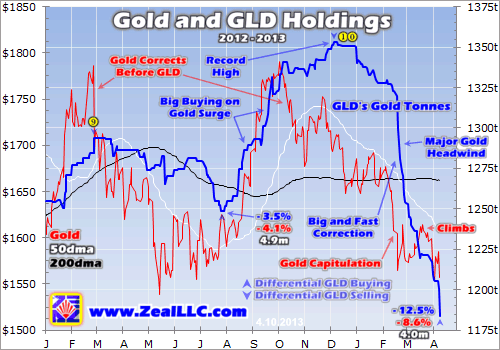


Remember Cyprus’s 13.9t of official gold reserves?  The recent “correction” in GLD’s holdings has forced it to dump a staggering 169.8t of gold bullion simply to keep GLD shares’ price tracking gold!  We are talking about 5.5m ounces of gold here, from this single American ETF!  There are only two gold-mining companies in the entire world (Barrick and Newmont) that produce that much gold in a whole year!

Yet the mass exodus from GLD by stock investors forced it to add 169.8t of gold supply in just over 4 months.  It’s hard to believe given how despised gold is today, but back on December 7th GLD’s holdings hit an all-time record high of 1353.4t.  They remained stable and held near this record for several weeks, until two simultaneous events hit in early January that started cracking gold’s bullish sentiment.

First the flagship S&P 500 stock index soared 2.5% on January’s opening trading day on news of the fiscal-cliff tax deal.  The biggest tax hike in US history had been narrowly averted at the very last minute.  And then the very next day, the minutes from the recent FOMC meeting were misinterpreted to imply the Fed was already preparing to shut off its brand-new QE3 debt-monetization campaign.  So gold sold off.
Ever since 2013’s fateful initial trading days, those psychological cracks plaguing gold have spread.  Every day that the stock markets’ levitation continued, gold fell farther out of favor among investors.  And then every few weeks there was either an FOMC meeting or the minutes from one to spook traders into somehow assuming the Fed’s unprecedented open-ended inflation campaign would end prematurely.

The resulting heavy differential selling pressure on GLD shares is readily apparent above.  This peaked in late February just after gold selling cascaded into a full-blown capitulation.  In just 7 trading days late that month, GLD’s custodians were forced to sell 5.0% of its holdings (65.5t) to buy back enough excess share supply to keep this ETF from decoupling from gold.  Like many market extremes, this became self-feeding.
As GLD dumped bullion to raise enough cash to buy back the flood of excess shares being sold, those very gold sales weighed on global gold prices.  This caused more gold stops to be triggered, and kindled more fear, scaring still more traders into exiting.  The lower gold went, the more people sold, and the more this selling forced GLD to add big supplies to a very weak gold market.  It was a relentless vicious circle.

As of this past Wednesday, GLD’s holdings had fallen a mind-boggling 12.5% in just over 4 months!  It has had to liquidate 1/8th of its total gold bullion to keep up with stock traders rushing for the gold exits.  Over this same span, the gold price is down 8.6%.  Since rising and falling GLD holdings reveal whether stock traders are buying or selling gold on balance, I’ve closely followed them daily since GLD’s birth.

GLD holdings trends are one of the best gold sentiment indicators available.  And provocatively they’ve long proven rather “sticky”.  While stock traders eagerly buy up GLD shares when gold is rallying and in favor, they have generally not sold too aggressively when gold was correcting.  So the sheer degree of the recent GLD holdings plunge sure felt exceptional.  I’ve been wondering if it was the biggest ever.

So this week I decided to look at all the GLD holdings “corrections” over this ETF’s entire history.  And I was pleasantly surprised to find out that we’ve weathered worse.  Coming off record highs, the recent 169.8t GLD dump is certainly the biggest absolute decline in its holdings.  But in percentage terms, GLD’s holdings suffered even bigger retreats as gold fell deeply out of favor during 2008’s crazy stock panic.
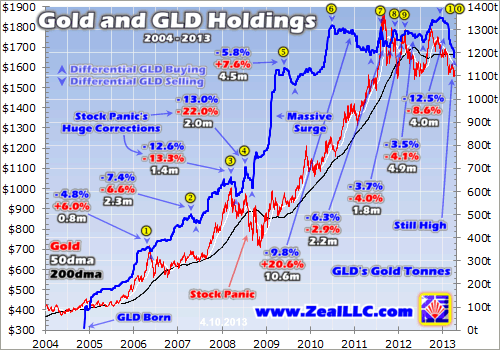


My suspicion that the recent GLD holdings plunge was exceptional was generally correct.  Outside of that once-in-a-century stock panic, GLD’s average holdings correction has merely been 5.9% over 3.9 months.  So while the recent holdings correction’s 4.0-month duration is on par, its 12.5% slide more than doubled what has been typically witnessed for the vast majority of GLD’s lifespan.  It was indeed very big.
The only comparable declines were leading into and during 2008’s stock panic, when GLD’s holdings plunged 12.6% over 1.4 months and later another 13.0% over 2.0 months.  It is interesting that these were the worst GLD selloffs ever seen, and they happened in far-worse gold conditions.
While gold is merely down 8.6% during the recent GLD holdings correction, it plunged by 13.3% and 22.0% during 2008’s!

The latter is particularly interesting and relevant today.  If there was ever a time for gold to shine as a safe haven, it was during that epic stock panic.  In a single month in October 2008, the flagship S&P 500 stock index plummeted 30.0%!  Fear was off the charts, with the definitive VXO fear gauge challenging 90 when only around 50 is normally the worst-case extreme.  The financial world was crumbling right before our eyes.
Yet gold couldn’t catch a bid!  Its price plunged 16.7% over that month-long span where the stock markets lost nearly a third of their value.  Stock investors deployed in GLD rushed to sell their shares, both disgusted by gold’s failure to surge on a financial Apocalypse and trying to raise cash wherever they could.  Between July and November 2008, gold fell an astounding 27.2%.  It was truly a total disaster.

The main reason gold plummeted during that panic is because safe-haven buying flooded into the US dollar instead, driving its biggest and fastest rally (22.6% higher in 4 months) ever witnessed.  But the key takeaway today is that the financial world was totally convinced gold was dead.  If it couldn’t rally in that panic, then it was no longer a safe haven.  There was no reason to own gold anymore, its bull was over.
Sound familiar?  That’s the exact kind of thing we’ve been hearing in recent weeks.  Because gold hasn’t rallied despite the Cyprus bank failures and record Fed debt monetizations, there must be something fundamentally wrong with this metal.  Traders are abandoning it in droves, just like they did in late 2008.

But obviously they were dead wrong to sell low then when gold was hated.  It was on the cusp of soaring.
Right as investors totally capitulated and gave up on gold in November 2008, it was carving a major bottom.  It would ultimately power from around $700 then to $1900 by August 2011.  And ever since it has consolidated high, it is simply at the low end of its multi-year trading range today.  A major gold correction driving or being driven by a massive 1/8th GLD holdings selloff was the best buy signal of gold’s bull!
I suspect the recent 1/8th GLD holdings correction will prove similarly bullish.  In order for stock traders to dump GLD shares rapidly enough to force it to sell so much bullion so fast, their sentiment has to be hyper-bearish.  They have to be utterly convinced gold’s bull is dead to sell so aggressively.

But whenever sentiment swings to such unsustainable extremes, major bottoms are carved leading into major uplegs.Extreme GLD selling on a daily basis is also a fantastic contrarian indicator itself.  I generally consider GLD differential selling pressure on any given day material if it is big enough to force GLD’s holdings down by more than 0.5% that day alone.  And big GLD holdings liquidation days are over 1.0%.  Clusters of these near gold lows are major bottoming indicators, they reveal sentiment in gold has grown too bearish to persist.
Since the February gold capitulation, we’ve seen 3 separate trading days where GLD’s holdings fell more than 1.0%.  They are pretty rare over GLD’s 8.4-year history, only occurring 51 times or about once every 40 trading days.  The last time a similar cluster was seen was actually in October 2008 during the stock panic, just before gold started more than doubling in its next mighty upleg that was being born in despair.

So historically big GLD liquidations, both in individual-trading-day and multi-month-trend terms, have actually been very bullish contrarian indicators.  This precedent completely contradicts many of the gold bears dominating the financial media, who claim excessive GLD selling is bearish rather than bullish.  In reality, stock traders panicking out of GLD shares is an indicator of fear reaching irrational extremes.
So smart contrarians fight the crowd and aggressively buy GLD holdings plunges.  The only way to buy low is to be brave when others are afraid, and they are certainly afraid of gold today.  Bearishness in this yellow metal has recently hit extremes not seen since the stock panic, the best gold buying opportunity of its secular bull.  The recent GLD holdings liquidation was also panic-magnitude, utterly unsustainable.

Stock investors have been fleeing GLD, selling low, so they can plow their capital into general stocks near nominal record highs.  The red-hot stock markets have fueled the dismal sentiment in alternative investments like gold.  But as soon as they decisively turn, which ought to be imminent given how overbought and euphoric the stock markets are today, the precious metals will start returning to favor.
The same unsustainable hyper-bearish sentiment forcing the massive GLD liquidation in recent months is crushing the gold miners’ stocks.  They are hyper-oversold, trading at their lowest valuations of their entire secular bull.  The main gold-stock index is scraping fundamentally-absurd 45-month lows, trading as if gold and silver were 41% and 53% lower than today’s levels!  The gold-stock sector is loathed today.

Which makes it an extraordinary contrarian buying opportunity!  At Zeal we’ve been concentrating our buying around this major gold bottom in smaller dirt-cheap gold and silver miners with dazzling fundamentals.  As sentiment inevitably turns in gold, the entire precious-metals realm is going to soar but the best of the miners ought to skyrocket.  We are talking about stock prices tripling or quadrupling!
So if you have cultivated the mental toughness to buy low when few others dare, gold stocks are the place to be today.  We are constantly researching that entire universe to uncover the most fundamentally-promising miners.  Last month we published a popular new 31-page fundamental report profiling our dozen favorite junior gold producers in depth.  Buy it today, buy some great gold stocks cheap, and thank us later!

We also publish acclaimed weekly and monthly subscription newsletters long loved by speculators and investors worldwide.  In them I draw on our vast experience, wisdom, knowledge, and ongoing research to explain what is going on in the markets, why, where they are likely headed, and how to trade them.  Our contrarian approach works, the 637 stock trades recommended in our newsletters since 2001 have averaged stellar annualized realized gains of +33.9%!  Subscribe today!

The bottom line is stock investors have indeed been panicking out of GLD in recent months.  This extreme bearishness has created a panic-grade drawdown in GLD’s holdings.  All this excess gold supply from GLD’s forced selling has been a major headwind for gold, exacerbating its latest correction.  But historically extreme GLD selling by stock traders is a major bottoming indicator for the yellow metal.

Like everything else in the markets, gold bottoms and embarks on major new uplegs when everyone is convinced it is dead.  Widespread fear soon leads to selling exhaustion, leaving only buyers.  So gold soon starts rallying again, gaining momentum.  This coming upleg has the potential to be very large as the euphoric, overbought, levitating stock markets inevitably reverse.  Alternatives will quickly regain favor.
Adam Hamilton, CPA

Source

Posted by Mr Thx Saturday, April 13, 2013 0 comments


We’ve now have just a little over 30 days until US breaches its debt ceiling.
We would have already done so, except Treasury Secretary Tim Geithner borrowed some $200 billion from emergency funds to buy a few weeks’ time (announcing that he’d be leaving his post before the actual ceiling was breached).

The “solutions” to the debt ceiling discussions range from outright insane ($1 trillion coins) to just staggeringly irresponsible (just get rid of any oversight and grow the debt without restriction).
Let us consider the facts.

The only reason the US is even having these discussions is because we’ve added $1+ trillion in debt to our balance sheet every year since 2008. The reason we were able to get away with this was because Congress hasn’t even implemented a budget since that time. Indeed, the last time a budget was even proposed (by President Obama in that case) it was rejected 97-0.

Let’s say a US family spent all of its savings and income and so began using credit cards to fund its purchases. Then, instead of implementing reforms and a budget, these folks decide to abandon any kind of tracking of their expenses and start spending even more. Eventually this family would begin to stop paying its bills.

What would you tell these folks if their proposed solution to this situation was to stop opening their mail?
At the core of this entire situation is a total lack of financial discipline. Indeed, at this point, the only thing the political class in the developed world seems to pay attention to is the bond markets: only when their bonds collapse and interest rates spike is there any sense of urgency to do anything (with massive debt loads, any increase in interest rates means hundreds of billions of dollars in more interest expenses).
On that note, the US 30-year Treasury appears to just have taken out its trendline:


Bear in mind, the US Federal Reserve has been the primary buyer of US debt. So if the US bond market begins to collapse at a time when the Fed is already buying this much, there isn’t a whole lot the Fed can do to fix the situation (other than just buy more… which inevitably leads to a debt implosion).
This situation has the potential to get very ugly. Remember the impact the failed debt ceiling talks had on the markets in July 2011?


At that time, the only thing that pulled the market back from the edge was the Fed’s announcement of QE 2. But the Fed has already just announced both QE 3 and QE 4. So this option wont be around to fix the fallout if the US breaches its debt ceiling again now.

Source HERE

Posted by Mr Thx Thursday, January 10, 2013 0 comments

With 2013 now under way, the Godfather of newsletter writers, Richard Russell, told his subscribers that after being in the business for 60 years, he has never seen anything like this (described below).  Russell also discussed the massive silver short position and gold’s eternal value.  Here is what Russell had to say: “Bull market or bear market?  Below we see a listing of the year-end cost of gold denominated in Federal Reserve Notes (these notes are now commonly called “dollars”).  From a market standpoint, we're looking at one of the greatest bull markets in history.  But ironically, referring to “dollars alone,” this is one of the worst bear markets I've ever seen.”
 
Richard Russell continues:

“Bear market?  Sure, back in the year 2000, for only 273 dollars you could buy one ounce of gold.  But by 2012, you needed over 1600 dollars to buy the same one ounce of gold.  The eternal value of gold doesn't change.  It's the purchasing power of the Federal reserve note that has changed.


The price of gold in terms of “dollars” has now risen thirteen years in succession.  But what is even more remarkable is the fact that most Americans have totally ignored (even despised) this remarkable bull market.  Let a stock rise seven or eight years in a row, and it will be the talk of Wall Street and the talk of every social gathering in the nation.


Yet this amazing bull market in gold stands alone, sneered at and almost hated.  I've been in this business for over 60 years, and I've never seen anything quite like it.  However, I do think I know something about human nature.  What I've learned about human nature is that it doesn't change.  For instance, if a stock creeps up year after year, sooner or later the crowd will discover it -- and then they'll pounce on it, ultimately sending that undiscovered stock far above its reasonable price.


My belief is that somewhere ahead, the crowd will latch on to gold.  Then, as disinterested in gold as they are now, the crowd will pile into gold with the same frenzy that overtook the storied “49ers” when they packed their bags, kissed their wives and kids good bye, and headed West in search of gold.


Gold is the only item that elicits both greed and fear.  The greed factor is so well known that I don't have to explain it here.  But the fear factor only arises when men (and women) see the “value” of their money disappearing.  Nothing concentrates the mind as dramatically as seeing the purchasing power of one's hard-earned income and savings being ruthlessly destroyed.


As I write, Ben Bernanke's Federal Reserve is systematically shaving off the purchasing power of the dollar in the same way that you can peel the layers off an onion.  The US has been in the process of constructing the greatest credit bubble in history.  The world has never seen anything like it.


This enormous bubble is now being attacked by the worldwide forces of deflation.  Fed Chairman Bernanke is terrified by the mere thought of deflation.  Bernanke will not stand for deflation.  He has said as much.  And he will attack deflation and crumbling asset prices with all the inflationary power at his command.


As the ocean of new dollars pours out of the computers of the Federal Reserve, the purchasing power of the dollar erodes.  It erodes slowly at first, but as the river of dollars turn into an ocean, slowly-rising inflation segues into a monster.  Finally, the crowd recognizes what is happening to their money.


The loaf of bread that cost a dollar last year suddenly costs four dollars.  The cup of coffee that cost a dollar last week goes on special today for two fifty.  The college tuition that cost four thousand dollars now costs sixteen thousand and there's the extra for a dorm. You're suddenly paralyzed.  A light bulb in your head starts to glow.  And just as suddenly, the mad, frantic rush for gold is on.


Old timers shake their heads knowingly and repeat the old saw, “There's no fever like gold fever!”  And the rush for the yellow metal turns into a full frenzy.  Even as I write, the subtle but tell-tale signs of “gold-fever” are seen and heard.  New gold funds and new gold ETFs are started.


Full-page advertisements appear in the newspapers, drawing attention to the loss of purchasing power in the dollar, and lauding the advantages of owning gold and silver.  Gold vending machines appear at airports and in European and Asian department stores.  Pressure is rising to force lawmakers to elect gold as legal tender.


On March 29, 2011, the state of Utah passed a law stating that gold and silver will be legal tender in the state of Utah.  Imagine, just imagine -- gold being treated as real money!  That alone shows us how far and how completely insane the nation's attitude towards gold and silver has become.  Gold has been treated as money for 3,000 years.  “As good as gold” is a well-known expression.  Yet, today in the US, gold is not considered to be legal tender.


No fiat money has lasted for as long as a century.  The US has had prior experience with fiat money -- the Civil War Greenbacks, the “Bills of Credit” of the original American colonies, the ill-fated Continentals during the Civil War.  None of these have survived, and neither will the Federal Reserve notes that we now refer to as “dollars.”


I dislike falling back on the morality argument, but consider this.  I may work a lifetime for five million dollars.  Yet some academic working for the Federal Reserve can press some keys on a computer and create ten billion dollars instantly without working up a sweat.  Is the ten billion dollars he creates moral money?  Did anyone work for the money?  Did anyone take a risk for the money?  Did anyone drop a bead of sweat for it?  No, then I claim it is immoral and actually evil money, and as such it is doomed.


The only power evil has is the power to destroy itself.  I affirm that the Federal Reserve note is doomed.  When the Federal Reserve note goes down the drain, all fiat money in the world will go down with it.  Today information travels around the world with the speed of NOW.  People around the planet will see that fiat money is a fantasy and a counterfeit fraud foisted upon them by unconscionable and unscrupulous bankers.  It is then that the crowd will turn to gold, in much the way that people turned to gold back in 1978 to 1980.


Now this may be “far out.”  I'm reading a lot about silver and its huge short position.  I hear that the silver shorts are bigger than the amount of physical silver that is readily available.  The silver mining stocks have already surged.  And I wonder if silver starts to boom, whether that action wouldn't rub off on gold?  Hmmm, it's a thought.”

source here

Posted by Mr Thx Tuesday, January 8, 2013 0 comments

It is ironic that stocks are at five years highs going into what is probably going to be the biggest disappointment of an earning`s season since the 2008 financial crisis. We got a hint of 4th quarter results during the disaster which was the 3rd quarter earning`s season where most companies missed on the revenue side, and those that beat EPS guidance, did so barely, and most of that was created through stock buybacks and creative smoothing techniques.


Make no mistake when a public company sets earning`s guidance these are numbers that are very conservative, and they expect to blow these numbers away given a healthy business environment. When a company just barely hits or beats the EPS number, and misses on revenue you know they were buying back stock, and trying any possible financial trick to attain the EPS number. One of the oldest tricks on Wall street, besides giving easy guidance so that when it comes time for earning`s the stock shoots up because they “beat” expectations.

The fact that companies have to struggle so much just to meet expectations tells how bad things are from a corporate profit standpoint. They have cut their operations to the bone for the last three years, and built earnings up from the bottom, and that strategy has reached its point of exhaustion. No more to be squeezed out of that cost cutting strategy.

The Fiscal Cliff 

Moreover, with the continual uncertainty coming out of Washington from a policy perspective, code word the Fiscal Cliff, it`s unlikely that CEO`s committed much towards year end discretionary CAP EX purchases which would spur corporate growth during the fourth quarter. So expect to hear the term Fiscal Cliff during Earning`s season quite a lot as the primary excuse for business headwinds by the executive teams during conference calls.

Deja Vu

Last quarter stocks were at these same levels, and companies started missing and no one wanted to sell hoping that they would get better earning`s reports, but firms just kept missing, and getting taken down one by one while the market stayed afloat at elevated levels.
Then more and more firms were missing on the same days, the big boys started missing, and finally the shorts were going to take multiple firms stocks down on the same day, and Wall Street pumpers threw in the proverbial towel on an options expiration Friday of all days, and took prices down to the next level in most stocks.

In other words, they tried to ignore the bad earnings and keep the rally alive, but the shorts are going to punish bad earning`s regardless of bullish sentiment.

Expect the same pattern of behavior as most fund managers are sheep and too stupid to actually get out before earnings season starts, and buy after the inevitable selloff. They wait and hope and once one big player unloads they all run for the exits at the same time leaving quite a carnage in stocks along the way. One benefit is that short sellers can get some very cheap puts and establish some very attractive entry points for the inevitable ride back below 1400 in the S&P 500.

The Debt Fight

Moreover, with the upcoming fight over increasing the debt limit just around the corner expect quite a sizable selloff in markets which sends everybody back into the comforts of bonds teasing bond vigilantes once again, and reminding everyone including the fed that we really are still in a deflationary, deleveraging cycle that will not turn until true growth based upon sound financial principles are in place in Washington.
Washington is the biggest reason this economy has taken so long to recover from the financial crisis in 2008. And their ineptitude has caused the fed to overcompensate with an unprecedented and borderline extreme monetary solution which remains to be seen what the eventual unintended consequences are of said policy.
As this is new territory for the fed, and a grand experiment which economists will be analyzing for the next 50 years of academic study as to the ultimate costs & benefits to our society.

Cost cutting versus top-line growth

Corporations have had to watch costs the last three years, work their employees longer hours, control costs from an operational standpoint, i.e., operate more efficiency and take advantage of low financing and borrowing costs to manufacture earnings where they can through stock buybacks and creative use of capital.
But the one thing that hasn`t been present for corporations is an environment where the economy is robust and we are adding 500,000 jobs a month to the economy, and they can afford to hire and grow profits from the top line through new growth opportunities.

Expect to see the 4th quarter earning`s season reflective of squeezing all that can be had from the bottom line over the last three years, and the lack of true growth opportunities, which showed its ugly head during the 3rd quarter earnings results, make a pronounced appearance this earning`s season.

Fund Managers are slow learners

Stocks will get hit hard as shorts take down the earning`s misses one by one, until the fund managers get the hint, and start selling before the shorts eat into their profits, and start dumping everything mid-way through this earning`s season.

The excuses will be prevalent, all pointing to a lack of certainty out of Washington, but the real reason is that you can only cut your way to profits for so long before you need actual real growth in the economy, and apart from the slight uptick from the bottom in the housing market, the rest of the economy is just not robust enough to produce earning`s growth that is reflective of top line opportunities.
By EconMatters


source here

Posted by Mr Thx Monday, January 7, 2013 0 comments

I was confident that the Fed had already begun printing. That seemed quite evident by the overall action in the commodity markets, the dollar, and the fact that stocks were unable to correct in the normal timing band for a daily cycle low. However, I didn’t really expect Ben would come out and publicly admit it. That one took me by surprise Thursday. I guess Bernanke wants to get full value for his attack on the dollar and make sure that markets are rising into the election.

At this point all the pieces are in place for the inflationary spike and currency crisis I’ve been predicting for 2014. We now have open ended QE that is tied to economic output and unemployment. But since debasing currencies has historically never been the cure for the bursting of a credit bubble, all the Fed is going to produce is spiraling inflation. So as this progresses we are going to see the Fed printing faster and faster as the result they are looking for never materializes. This is what will ultimately drive the currency crisis at the dollar’s next three year cycle low in 2014.


At this point, watch the price of oil if you want to know when the next recession is going to begin. As I’ve pointed out many times in the past, recessions (well, at least since World War II) have all been preceded by a sharp spike in the price of energy. Any move of 100% or more in a year or less, has historically been the straw that breaks the camel's back. Modern economies cannot survive that kind of shock. It invariably triggers the collapse of consumer discretionary spending and economic activity comes to a grinding halt.


In 2007 oil surged out of the 3 year cycle low into a parabolic advance as Bernanke trashed the dollar in the vain attempt to halt the sub-prime collapse. That 200% spike in oil is what tipped the economy over into recession, which was then magnified in the fall of `08 as the financial bubble and debt markets imploded.


I think it’s safe to say that Bernanke doesn’t understand his role in causing the recession of 08/09 as he is now making the same mistake again. I think he believes the recession was solely triggered by the financial meltdown. That was the icing on the cake, but not the initial trigger that caused the recession.


Despite the complete inability of QE to heal the economy or job market, and since he really has no other tool, Bernanke just keeps doing the same thing over and over expecting a different result, but never getting it.

Commodities are the check that prevents  Keynesian economic policies from healing the global economy. Keynesian academics either don’t understand this, or refuse to acknowledge it. Until they do, or we install Austrian economic advisers in the government, we are destined to continue making the same mistakes over and over.


So we will watch the price of oil as it rises out of its three year cycle low. If it hits $160 by next summer that will probably be enough to start the economy on the next downward spiral. If politicians get involved (and I’m sure they will) and try to impose price controls, they will multiply the damage and probably guarantee that the next economic downturn escalates into a truly catastrophic depression.


Until we see the spike in oil and the corresponding damage to the economy, no one has any business try to short anything, well maybe bonds, but even that will be risky because the Fed is going to be actively trying to prop the bond market up and keep interest rates artificially low.


All in all there is going to be so much money to be made on the long side, especially in precious metals, that no one needs to fool around with puny little gains on the short side, especially in a market that is going to be hell to trade from the short side. The time to sell short will be in 2014 after the dollar’s next three year cycle low. The dollar’s rally out of that bottom will correspond with the next global economic collapse, ultimately caused by the decisions made by the ECB and the Fed this past week. I dare say if they could see the damage their decisions are going to inflict upon the world and the dire unintended consequences, maybe they would finally stop kicking the can down the road and let the economy heal naturally. Of course that would entail several years of severe pain and politicians, as we all know, are extremely allergic to that.


2014-2015 is when we are going to see the stock market drop 60-75% and the next great leg down in this secular bear market. But until then there’s probably a pretty good chance we are going to see the S&P at new all time-highs in the next 6 months – 12 months.


source

Posted by Mr Thx Tuesday, September 18, 2012 0 comments

Anthony Migchels – Real Currencies August 25, 2012

How do we know this?

Consider a mortgage. We borrow $200k, and after 30 years we will have payed about $500k. So we pay $300 thousand dollars interest over the loan.

What would happen with our purchasing power, if we only needed to repay the principal? It would mean we would have 10.000 per year more purchasing power during the 30 years we repay the mortgage.

Our credit would greatly improve, because our liabilities would be much smaller.

Interest is payed to those who have money, and payed by those who don’t, and therefore need to borrow.

Interest is therefore a wealth transfer from poor to rich. Margrit Kennedy, a German monetarist, has quantified this wealth transfer in Germany. Her conclusions: the 80% poorest Germans pay 1 billion euros per day (365 billion per year) in interest to the richest 10%. The next richest 10% pay about as much interest as they receive.

Also, with in the 10% brackets the same wealth transfer is happening: so the poorest 8% of the richest 10% pay interest to the richest 1%.

It stands to reason that the situation is more or less the same everywhere. This means, that the poorest 80% Americans pay about 1,5 trillion dollars per year to the richest 10 percent.

This is the key driver centralizing wealth in the hands of the plutocracy.

Another problem with interest is, that it is not transparent who pays what. The strange thing is, that even if you don’t have any debts at all, you will still lose up to 45% of your disposable income through interest.
Producers incur ‘capital costs’. They pass these costs on to their customers. The amount of interest they pay on the loans to finance their production differs per sector. But it transpires that on average 45% of the prices we pay can be related to cost for capital.

Now, back to the debt.

Is it reasonable that one should be able to get a mortgage? Is their something intrinsically wrong with the debt?

It is probably quite useful for the large majority of the people to be able to get a mortgage. Most people would not be able to buy their own homes if they were not able to go into debt.

Another important aspect is, that in the case of a mortgage the creditor incurs no risk at all: he has the house as collateral.

And who is the creditor? In most cases a bank. A bank basically is a credit facility. However, the bank has made us believe that it is their credit, that we are borrowing their money.

This is not the case. Credit is the result of collateral and future income. A person has about 30 to 40 productive years and it that timespan an average American will make about 1 or 2 million dollars.

This future income is what makes the bank provide the credit.

But this future income is not the Bank’s, it’s the individual’s income. It is therefore their credit.

So banks capitalize the credit of the population.

We know that in the current construct all this interest is being raked in by the banks by creating the money at the time the money is loaned out. Through Fractional Reserve Banking.

We consider it unfair that the bank has the right to create money. Therefore a full reserve gold standard is propagated. Not only taking away the iniquity of money creation, but also the nasty habits of banks going broke by overleveraging themselves.

But if we take out a mortgage in a full reserve gold bank, we would still pay 500k for a 200k home. We would still lose 45% of our disposable income through interest passed on in prices.

To further the above points I’ll leave you with a little thought experiment.

What would happen if………

We would nationalize all banks. This would not be unfair, they are all busted and they already needed 16 trillion in Federal Reserve handouts. They are still all under water.

We would weed out all the BS. Derivatives would all be canceled, all the funny financial products gone.

We would maintain real debts by businesses and consumers, mortgages, and the national debt.

But we would cancel all interest payments from now on. Of course, savers would also no longer receive interest, but keep in mind that the average American loses far more in debt service than he gains in interest on his savings.

If debts are repaid, the money supply deflates, to maintain a stable money supply we would give out as much new credit as there are loans being payed off.

What would this mean? A direct end to the depression, because enormous purchasing power in the economy would be released. Consumers would be twice as rich, prices would collapse because capital costs are gone.
The credit of the people borrowing from the banks would massively improve, immediately putting an end to solvency problems of these banks. There would be no more bailouts.

The Government would have an immediate windfall of 700 billion per year, which is what it currently loses on debt service. But the Government, too, loses half of it’s disposable income to capital costs through prices. Not to mention the increased tax income from an exploding economy. So it is likely that without any austerity the deficit would disappear quite soon.

The banks would be reorganized, many people, especially the expensive ‘traders’ and ‘investment bankers’ would all be gone. All that would remain are the people running day to day banking services. Therefore the costs of these banks would be much lower. These costs can (and must) be passed on to debtors, but they would be low.

I believe that managing a risk free loan like a mortgage should cost no more than max. 10% over thirty years, so you would pay maybe 220k for 200k home.

There would be no more bailouts, no more bonuses. The wealth transfer from poor to rich would end over night.

All these benefits would go to Main Street. It would imply a major decentralization of economic power, which is also a key point.

Of course, it would disown the Trillionaires, but hey, I say enough is enough.

Now, I’m not saying that this what we should do at this point. This is just a thought experiment.

It shows it is not debt that is the problem, but interest. It shows that it is not a full reserve gold banking system we need, but interest free credit.

Of course, with this analysis we have not addressed inflation, which is strongly on the minds of most proposing full reserve Gold backed currency. We will deal with that next time.

source

Posted by Mr Thx Tuesday, August 28, 2012 0 comments

Aug 06, 2012 - 03:38 PM

By: Graham_Summers

Stock-Markets

Best Financial Markets Analysis ArticleMany people have been writing in to ask me, “why are you focusing on Europe so much? Who cares about Spain?”

The short answer is that everyone should care about Spain. Spain could potentially take down the banking system in Europe, which would mean the US facing a Financial Crisis at least on par with 2008.

How would this unfold?

To understand this, you need to understand how the European banking system works. By now everyone knows that many European countries have massive debt problems: Portugal, Italy, Ireland, Greece, and Spain, the infamous PIIGS.

Well, when these countries issue debt, it is mainly the European banks that buy it. So let’s say Spain issues €5 billion in new debt. Most of that will be snatched up by Spanish banks or some other European financial entity.

This bank will then park this debt on its balance sheet as a “senior asset” or an asset that has the least amount of risk (I realize this sounds insane given how bad Spain’s finances are, but this is how the banking system’s “risk models” work).

The bank will then use this Spanish bond to backstop loans to Spanish businesses, developers (not so much any more) even student loans: pretty much every other type of loan the bank might make.

On top of this, the bank will also use this Spanish bond to backstop hundreds of billions of Euros worth of trades.

Do you see the problem with this? If Spain defaults, one of the most important “assets” used to backstop its loan and trade portfolio goes up in smoke. At that point the bank is essentially insolvent and would have to liquidate its loan portfolio while trying to stave off a bank run (as you’ve likely noticed, Spain is facing bank runs galore).

So what? Who cares? This is Spain’s problem right?

Wrong. This is Europe’s problem as European banks across the board are sitting on Spanish debt: Spain’s sovereign bond market is €2.1 trillion in size.

So if Spain defaults, then a heck of a lot of EU banks (and some US banks for that matter) will see some of their “Senior Assets” go up in smoke, rendering them insolvent. This in turn could spread like wildfire throughout Europe’s banking system.

This is why the Spanish bank bailout was so rapid (it took only one weekend). EU officials know that if Spain’s banking system goes down, most of Europe will as well. This is also why EU officials continue to give money to Greece despite the clear fact that Greece is completely and totally bankrupt and has failed to meet fiscal demands placed on it throughout the EU Crisis.

Indeed, I wager most people at some point have asked themselves, “what’s the big deal about Greece? It represents only 2% of the EU economy. How is it that a country this small is still an issue after TWO YEARS!?!”

Now you know. By some estimates, Greece’s true debt exposure is north of $1 trillion. Lehman brothers had $649 billion in assets when it collapsed. Can you imagine the impact that a $1 trillion vacuum would have on the EU’s banking system (a banking system which backstops well over €200 trillion in derivative trades by the way).

How would the debt implosion of Spain’s $2.2 trillion in sovereign bonds affect the financial system? What about the effect of Europe’s $46 TRILLION banking system collapsing?

It would be Lehman by a factor of ten, easily.

So what does this have to do with the US?

The US banking system is $12 trillion in size. And this backstops over $220 trillion in derivative trades. Of this $220 trillion, 85% are based on interest rates. So…

If Spain, or any of the other PIIGS default, and Europe’s banking system (which is $46 trillion in size by the way) crumbles, interest rates across Europe will spike as the EU sovereign crisis spreads.

At the same time, Treasuries will spike pushing interest rates close to ZERO in the US, if not into negative territory (this happened when Lehman went under).

This in turn would very likely trigger an implosion of all those derivative trades based on interest rates. This blows up Wall Street and likely results in bank holidays and the stock market even being closed down for a period.

This is why Europe matters. This is why Spain could wipe out your 401(K). This is why European leaders are so frantic NOT to let a default occur in Greece or Spain (remember, the Spanish bailout was rushed through in less than a weekend).

In simple terms Europe is a HUGE deal for everyone. We’re not talking about some distant region far off in the distance that we will watch go down from our decks. We’re talking about systemic risk on a scale that would make 2008 look tiny in comparison.

This is why I keep talking about Europe so much. And it’s why I’m more concerned now than I was in early

source

Posted by Mr Thx Tuesday, August 7, 2012 0 comments

SONGKLA (Thailand), July 9 (Bernama) -- Yayasan Pembangunan Islam Malaysia (YaPEIM) or Foundation for Islamic Development Malaysia, will be raising the funds for Ar-Rahnu financing to RM1 billion next year from RM800 million this year.

Its Director General, Datuk Dr. Abd. Malek Awang Kechil, said the move to increase funds was based on the rising demand from traders for the Islamic based mortgage product, particularly from operators of small enterprises.

"YaPEIM's Ar-Rahnu has received encouraging response due to its much lower mortage rates compared with other financial institutions.

"Besides that, the speedier processing time of 15 minutes has also contributed to the rising demand," he said following the launch of a corporate social responsibility programme at the Wittiya San Suksa Religious School here today.

Also present at the event was the founder of the school, Hasan Ali and Principal, Toha Cinda.

A total of RM108,000 in contribution was also given to help upgrade the school's infrastructures and its cooperative business to beef up the school's economic resources.

The contribution was in line with the resolution taken at the 2012 Regional Ar-Rahnu Secretariat Conference, which concluded in Pattani last night, to actively carry out CSR activities towards the well being of the Muslim community.

On the expansion of YaPEIM's Ar-Rahnu branches this year, Abd Malek said the foundation was aiming to open up 24 new branches this year involving an investment of about RM8 million per branch.

However, this would depend on the situation and if there are old branch offices in need of upgrading, they would be given priority rather than opening a new one, he said.

"The cost of investment needed for upgrading a branch would be about the same to building a new branch," he said.

Abd Malek said several franchise outlets will be also opened this year and that the foundation had already identified suitable locations for this.

YaPEIM currently has 256 Ar-Rahnu branches nationwide.

-- BERNAMA

Posted by Mr Thx Tuesday, July 10, 2012 0 comments

KUALA LUMPUR: Malayan Banking Bhd (Maybank) aims to attract RM32 million in the first year for its new product that allows investors to invest in silver.

The banking group is the first in the country to offer a silver investment passbook account, which allows deposits and withdrawals in the precious metal to be made at a daily price in ringgit.

Maybank said in a statement yesterday that this could be done at any of its branches, without the hassle of keeping the physical silver.

The product, known as the Maybank Investment Silver Account, comes as Maybank diversifies its offerings on previous metals.

Many banks in the country, including Maybank, already have a similar product for investment in gold.

Maybank's deputy president and head of community financial services, Lim Hong Tat, said investing in silver was appealing since it was highly valued for jewellery and industrial practices.

"In addition, silver will always be valuable regardless of the economic climate.

"The returns on customers' investment are dependent on the silver price fluctuations and the transactions would be recorded in the customer's passbook for easy record and maintenance," he said.

Lim said the new product would address increasing demand from those who had been investing in international grade silver bars.

The minimum investment for the product is 20 grammes.

Purchases of silver will be based on Maybank's current silver selling price quoted in ringgit per gramme. It was priced at RM2.95 per gram as at July 3.

"With this innovative option, we are targeting 20,000 customers in one year," Lim said.

In 1997, Maybank introduced the Maybank Gold Investment Account (MGIA) that enables customers to invest in gold.

The MGIA now has a portfolio of more than 66,000 accounts with investments totaling more than RM650 million.

source

Posted by Mr Thx 0 comments


Pos Malaysia Bhd (Pos Malaysia) and Bank Muamalat Malaysia Bhd (BMMB) today signed a strategic partnership agreement
to offer Islamic pawn broking (Ar-Rahnu) services to the public at selected Pos Malaysia outlets nationwide.

Its chief executive Khalid Abdol Rahman said the ArRahnu@POS service would initially commence operations at Pos Malaysia Bandar Baru Bangi and the Kuala Terengganu General Post Office next month.

The services would be expanded gradually to 50 Pos Malaysia outlets within a year, he said, adding that the Islamic pawnshop system would be managed by Pos Malaysia subsidiary, Pos Ar-Rahnu Sdn Bhd.

"In view of the growing demand for Ar-Rahnu services, Pos Malaysia outlets which are strategically located would provide customers the convenience of accessing and performing Ar-Rahnu transactions," he said in a statement.

The existence of ArRahnu@POS would enhance the product offering at Pos Malaysia outlets besides offering an alternative micro-credit convenience to the public and small time entrepreneurs who may have difficulty in obtaining financing from a bank, he added.

Meanwhile, the statement also said Koperasi Pos Nasional Bhd has granted Pos Ar-Rahnu Sdn Bhd its Islamic pawn broking rights under a cooperation agreement signed between both parties.

Under the agreement, Ar-Rahnu services would be made available at selected Pos Malaysia outlets for three years. -- BERNAMA

Posted by Mr Thx Monday, July 2, 2012 0 comments

"The crash is over", says an economist. "Housing can only go up," says another. "I think the market has bottomed out," says one builder. "It appears we have turned the proverbial corner," says a second.


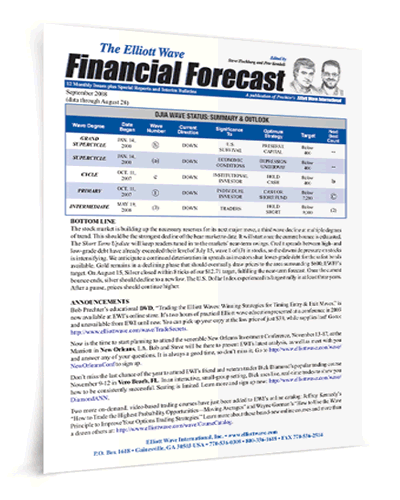
After hitting a low with stocks in March 2009, U.S. single family building permits rallied in three waves into March 2012. The latest high is more than 65% below the September 2005 peak. A MarketWatch commentary insists, "Permits Push Signals U.S. Housing Boom." These assessments are flooding in even though many home buyers from 2010 and 2011 are already underwater! According to CoreLogic, more than one millions U.S. home buyers who have taken out low-money-down FHA mortgages over the last two years already owe more on their loan than their homes are worth. The FHA's policy of accepting almost no money down is deadly when..... continues in the May issue of EWI's Financial Forecast 10 page report available for FREE.
Download this special issue for free, but fair warning: It's only available until Thursday, May 31.
Here's a quick summary of what you'll find inside:
  • Europe's debt crisis.
  • European political crisis.
  • Charts flashing danger signals.
  • What U.S. stock investors should know NOW.
  • Sentiment analysis.
  • Tech Stock signals for Apple, Google and Amazon
  • NYSE margin debt signal.
  • Facebook special.
  • And much more, including detailed Elliott wave charts and insights on gold,silver, bonds, the U.S. dollar, the economy, inflation vs. deflation and real estate
Learn More and DOWNLOAD EWI's NEW 10-page May 2012 Elliott Wave Financial Forecast here - It's FREE. (requires a valid email address).

About the Publisher, Elliott Wave International Founded in 1979 by Robert R. Prechter Jr., Elliott Wave International (EWI) is the world's largest market forecasting firm. Its staff of full-time analysts provides 24-hour-a-day market analysis to institutional and private around the world.

source

Posted by Mr Thx Monday, May 28, 2012 0 comments

Spain is a catastrophe on such a level that few analysts even grasp it.
Indeed, to fully understand just why Spain is such a catastrophe, we need to understand Spain in the context of both the EU and the global financial system.


The headline economic data points for Spain are the following:
  • Spain’s economy (roughly €1 trillion) is the fourth largest in Europe and the 12th largest in the world.
  • Spain sports an official Debt to GDP of 68% and a Federal Deficit between 5.3-5.8% (as we’ll soon find out the official number)
  • Spain’s unemployment is currently 24%: the highest in the industrialized world.
  • Unemployment for Spanish youth is 50%+: on par with that of Greece
On the surface, Spain’s debt load and deficits aren’t too bad. So we have to ask ourselves, “Why is unemployment so high and why are Spanish ten year bills approaching the dreaded 7%?” (the level at which Greece and Portugal began requesting bailouts).
The answer to these questions lies within the dirty details of Spain’s economic “boom” of the 2000s as well as its banking system.
For starters, the Spanish economic boom was a housing bubble fueled by Spain lowering its interest rates in order to enter the EU, not organic economic growth.
Moreover, Spain’s wasn’t just any old housing bubble; it was a mountain of a property bubble (blue line below) that made the US’s (gray line below) look like a small hill in comparison.

continue here

Posted by Mr Thx Tuesday, May 1, 2012 0 comments

Malaysia - Exchange Rate Policy - Nov 10 2011

MALAYSIA CURRENCY FORECAST

Spot
Ave-11 Ave-12
MYR/US$ 3.1200
3.1100 3.1800
MYR/EUR 4.2714
4.4500 4.3800
Overnight Policy Rate (%) 3.00
3.00 3.00
Source: BMI, November 10 2011

Short-Term Outlook

We see increasing risks that the Malaysian ringgit could experience further selling pressures over the coming weeks due to resurfacing troubles in the eurozone. Following a sell-off across regional currencies in September, the Malaysian ringgit depreciated by around 7.5% before finding support at MYR3.2048/US$. Further negative developments in the eurozone could see the ringgit retesting its recent low of MYR3.2048. A break below this level would present significant downside risks to our year-end target of MYR3.1500/US$ for the currency.
External Headwinds Remain
Malaysia - Malaysian Ringgit Spot, MYR/US$
Source: Bloomberg, BMI

Core View

Global economic headwinds, including the sovereign debt crisis in the eurozone and growing concerns of a hard-landing in China, should spell further weakness for risk-on currencies including the Malaysian ringgit over the coming months. However, despite these downside risks to the Malaysian ringgit's outlook in the short term, we expect the country's robust current account dynamics to provide support for a steady appreciation in the currency over the medium term. Furthermore, a positive economic outlook should underpin strong foreign direct investment (FDI) inflows and fuel demand for the ringgit over the coming quarters. Nonetheless, we expect further weakness in the currency in H112 before the ringgit resumes its bullish uptrend in H212. This means that the ringgit should average at around MYR3.1800/US$ in 2012 before strengthening to MYR2.8500/US$ by end-2013.

Despite cooling external demand, Malaysian exports have remained resilient in recent months. Trade exports grew 10.8% year-on-year (y-o-y) in August (up from 6.9% y-o-y in July) while outpacing that of imports at 6.8%, resulting in a healthy trade surplus of US$3.7bn. Although we expect the trade balance to narrow over the coming months, a surplus would nonetheless be positive for the ringgit. Meanwhile, FDI inflows are likely to remain strong in 2011 due to a positive response from foreign investors towards the government's ambitious Economic Transformation Plan (ETP). In fact, we have already seen compelling evidence that investor optimism over the ETP has been a key factor behind the surge in capital inflows into Malaysia in 2011. According to a survey conducted by the International Trade and Industry Ministry, local and foreign private sector companies are expected to commit MYR50.6bn (US$16.8) worth of investments in 2011. We are optimistic that these FDI inflows should provide further support for the currency over the coming quarters.

Strong Cushion Of Reserves
Malaysia - Foreign Reserves, US$mn
Source: Bloomberg, BMI
According to figures published by Bank Negara Malaysia (BNM), the recent wave of selling pressure in the foreign exchange market drained the country's foreign reserves by 4.1% from US$134.5bn in August to US$129.1bn by the end of September. However, it is worth noting that the central bank's intervention in the foreign exchange market is largely aimed at limiting short-term volatility in the exchange rate, rather than an attempt to defend against a balance of payments deficit. As the accompanying chart shows, despite the central bank's intervention, the country's foreign reserves remain above its pre-crisis peak. Our view that Malaysia's trade balance will remain in surplus while FDI inflows will continue to grow over the coming quarters means that we should see a continued accumulation of reserves.

We note that movements in the Malaysian ringgit and the Chinese yuan are highly correlated as a result of BNM's conscious efforts to keep Malaysian exports competitive. Given that we expect external demand to remain relatively subdued in 2012, export growth should continue to slow over the coming months. This poses a risk that the BNM may seek to limit any significant gains for the ringgit in order to prop up exports.


Catching Up With The Yuan ?
Asia - Spot MYR/US$ (LHS) & 12-Month CNY/USD NDF outright (RHS)
Source: Bloomberg, BMI

Risk To Outlook

FDI inflows will play a major role in sustaining a steady appreciation in the Malaysian ringgit over the coming quarters. To a great extent, this is heavily dependent on the successful implementation of the government's ETP. We warn that Malaysia's deteriorating fiscal position, which we expect to amount to a deficit of 5.6% of GDP in 2012, represents a significant risk to the government's ability to implement the ETP. Should investor sentiment start to wane on the back of growing concerns that the government could face difficulties in financing the ETP, a slowdown in FDI inflows would mean that the currency could see limited gains in H212.

source

Posted by Mr Thx Wednesday, April 11, 2012 0 comments

Myanmar - Economic Activity - Dec 06 2011

BMI View: On the heels of recent surprisingly fast-paced reforms, potential opportunities for Myanmar's economy are perhaps the highest they have been in over five decades. Moving forward, the economy could be set for a boom period in real estate, tourism, construction, and exports, but much will depend on the government's continued push towards reform and the eventual lifting of stifling US and EU sanctions. We see the Myanmar economy growing by 5.0% in 2012 following a 6.0% performance in 2011 even as growth in the rest of the world falls more sharply given the country's unique prospects of economic liberalisation.
 
One of Asia's best educated and wealthiest states prior to a military coup in 1962, Myanmar is now bereft with a cumbersome dual-rate exchange system, a major infrastructure deficit, and heavy sanctions from the US and EU following almost five decades of failed economic policy. However, on the heels of an election that was widely derided as a rigged handover of power from the military to its own factions in 2010, change may finally be coming in earnest to the beleaguered resource-rich state. 

The culmination of recent (and surprisingly strong) reform efforts was US Secretary of State Hillary Clinton's November 30 visit to Myanmar, during which she met with President Thein Sein and political activist Aung San Suu Kyi. The visit represented the first time such a high level official from the US had visited Myanmar since 1955 and heralded a major thaw in relations between the two countries. Following such an extended period in isolation, the recent pace of change has been relatively breakneck and could open up myriad opportunities for Myanmar's struggling economy. 

Dependence On China To Wane

Myanmar's sudden shift towards political reform is highly indicative of its intentions to stem its growing reliance on giant neighbour China. Over the past 18 months, Myanmar has received 20% more foreign direct investment inflows than it had over the preceding 20 years combined, with China responsible for 70%. President Thein Sein's September decision to halt the China-backed US$3.6bn Myitsone dam project signalled that the new government is serious about balancing the playing field with China, and to do so, Naypyidaw has now turned towards the West.

Shooting Higher
Myanmar - Stock Of Foreign Direct Investment, US$mn
Shooting Higher - Myanmar - Foreign Direct Investment, US$mn

Source: BMI, UNCTAD, Myanmar CSO

This is not to say that Myanmar's relationship with China is likely to deteriorate precipitously. Given China's thirst for Myanmar's natural gas and copper resources, and Myanmar's continued need for Chinese investment, the two countries' mutual interests promise to keep relations close. Moving forward, China is very likely to remain Myanmar's closest ally and largest investor as was indicated by head of Myanmar's armed forces General Min Aung Hlaing's auspicious visit with putative future Chinese president Xi Jinping just days before Clinton's arrival. 

Lifting Of Sanctions Could Usher In New Era

Still, détente with the US in particular could present monumental economic opportunities for Myanmar. Since 1997, the US has forbidden all new investment by American companies into Myanmar as well as most Myanmar exports to the US. While the US has repeatedly stated that Myanmar's government will have to show considerably more progress on the political reform front before it can consider reducing or lifting sanctions, Clinton's visit is a major step forward, indicating that the US is likely to reward Myanmar further if the reform process moves ahead. 

The lifting of sanctions by the US and EU would solidify Myanmar's re-emergence into the international economy and could eventually set the stage for the country to build its own economic miracle. Rich in natural gas, timber, gems, metals, and myriad other valuable natural resources, Myanmar could potentially become a resource exporting powerhouse. Furthermore, with a literacy rate near 85% and at least 5mn English speakers nationally (most of whom live in Yangon) out of a total population near 60mn, Myanmar possesses considerable human capital.

Secondary Axis Required
Asia - Annual Exports Of Goods, US$bn (Myanmar RHS)
Secondary Axis Required - Asia - Annual Exports Of Goods, US$bn (Myanmar RHS)

Source: BMI

Still, it should be noted that corruption remains extremely widespread across Myanmar and will continue to plague its poor business environment for an extended period despite even swift wide-ranging reform. Myanmar's current state is underscored by Transparency International's most recent Corruption Perceptions Index rankings, which place the country second worst in the world, tied with Afghanistan and above only Somalia. 

Real Estate, Tourism Set To Boom?

In the short term, Myanmar's real estate and tourism sectors stand to gain immensely from an opening of the economy. In stark contrast to just one year ago, when struggling local hoteliers were converting chronically vacant rooms to office space, room shortages are already cropping up in the country's largest and most economically active city, Yangon, as businessmen and tourists alike are drawn towards the country's rapidly changing atmosphere.
In the real estate sector, even though prices have risen for every year for the past 20 years (according to media and anecdotal reports), the hopes that reform will lead to reduced limitations on foreign ownership should keep already lofty prices underpinned through 2012. 

With cash being far too risky for most wealthy Burmese to hold and foreign banking not an option for almost anyone holding a substantial amount of wealth, rich Burmese have plunged their capital into real estate, sending the market surging over the past few years. Prices have been reported as high as US$1,245 per square foot in the most sought after locations in Yangon, with properties in some upscale neighbourhoods hovering around US$375 to US$625. 

Still, if and when serious economic reforms take place, foreign demand could lead to massive speculation in the market, driving prices even further skywards over the medium term in what remains an exceedingly underdeveloped market. Furthermore, whereas booming property prices have thus far been restricted to a very limited section of Yangon, they could begin to spread rapidly should economic reforms move ahead as hoped. In such a scenario, a lack of office space in Yangon (where there is only 540,000 square feet of office space, or the equivalent of one New York skyscraper) and across the country is also likely to portend a construction boom. 

Kyat Could See Further Strength

Despite having the brightest outlook in nearly six decades, the Myanmar economy still faces major challenges before it can enter the pantheon of South East Asian miracle countries like Vietnam and Thailand. Standing in its way is a dilapidated exchange rate mechanism, where the black market rate of the Myanmar kyat to the US dollar is more than 120 times greater than the official government rate. As the official government rate of MMK6.4355/US$ is rarely (if ever) used to settle transactions, the black market rate, currently at MMK776.00/US$, is the effective exchange rate. 

Although the government is working with the IMF in order to move towards a single-rate mechanism, it lacks the ability to control the currency in a meaningful way. In light of the suddenly reform-minded government, as well as historic communication with the US, we now see the possibility of continued strength in the kyat despite it having appreciated more than 20% over the past two years. As the economy opens up, foreign demand for the kyat will surge, underpinning the currency's already strong historical price. 

Significant Upside Risks To Growth Forecast

Despite the growing chance of renewed recession in the US and EU, Myanmar's starting position as a nearly completely isolated economy means that it bears little exposure to the global economy's woes. As a result, risks to our growth forecast of 5.0% for 2012 are weighted heavily to the upside. Should either the US or EU ease sanctions considerably, we would consider revising our forecast upwards. 

 
MYANMAR - ECONOMIC ACTIVITY

2011 2012 2013 2014 2015 2016
Nominal GDP, MMKbn 1 45,024.2 f 51,648.3 f 59,247.1 f 67,963.8 f 77,963.0 f 89,433.3 f
Nominal GDP, US$bn 1 55.5 f 60.9 f 67.1 f 74.0 f 81.6 f 90.0 f
Real GDP growth, % change y-o-y 1 6.0 f 5.0 f 5.0 f 5.0 f 5.0 f 5.0 f
GDP per capita, US$ 1 890 f 956 f 1,033 f 1,117 f 1,207 f 1,305 f
Population, mn 2 62.4 f 63.7 f 65.0 f 66.3 f 67.6 f 68.9 f

Notes: f BMI forecasts. Sources: 1 Asian Development Bank. 2 World Bank/UN/BMI.

Posted by Mr Thx 0 comments
Related Posts Plugin for WordPress, Blogger...

Sekapur Sirih Seulas Pinang

My photo
Alor Gajah, Melaka, Malaysia
Sharing is caring. This blog is about sharing information that available in web space. The information is related to Finance, Business & Trading.

Enter your email address:

Delivered by FeedBurner

Malaysia